
How EO Vietnam builds leaders
Three posts about the Leadership Program, from three vantage points: the architect who designed it, the president who brought it in, and the room where Session One happened.
Leadership is a hierarchical process. Lead yourself, then lead others, then lead the organization, each stage depending on real ability in the one before it. EO Vietnam built its Leadership Program around that hierarchy, because the chapter's own Forum sessions kept surfacing the same pattern: the skills that got a business this far are rarely the ones it takes to run it from here.
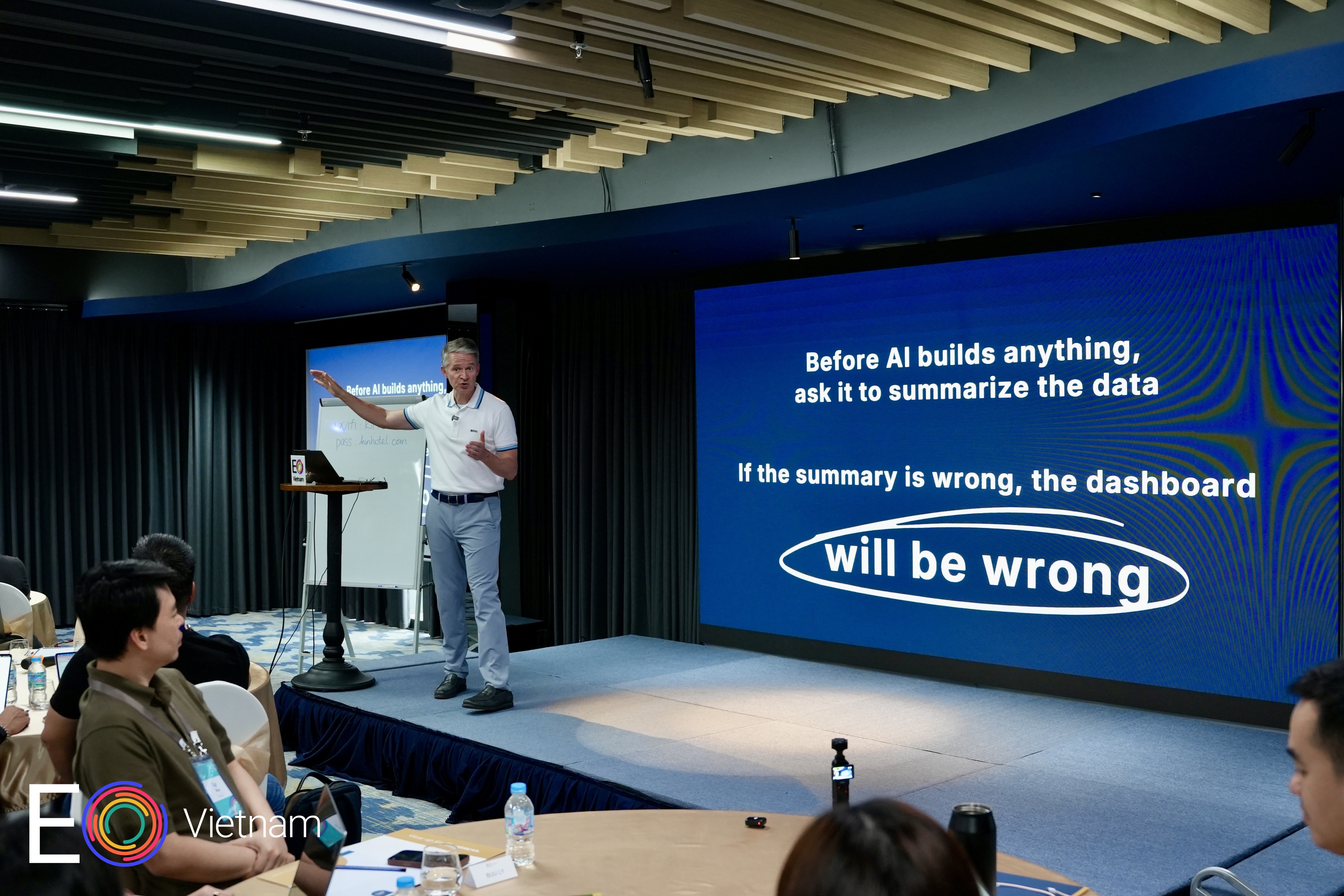
That hierarchy comes from Brooks C. Holtom, PhD, Professor of Management at Georgetown University's McDonough School of Business and one of the most cited researchers in the world on employee retention with more than 26,000 academic citations to his name. He built Leadership in the AI Era directly with EO Vietnam's own team, for founders leading here. Twelve sessions span the three levels, and AI shows up inside every one of them, from how a founder plans their week to how they build a team that works alongside new tools.
The Brandbook exercise
At the first stage, the work is specific enough to fit on one page. Leadership identity and brand, emotional intelligence, and communicating with impact make up this level. The first of those three sessions ran with 27 entrepreneurs, 24 of them in person at Vulcan Labs in Saigon over steak, shrimp, and truffle mashed potatoes, three joining by video. Every attendee left with a completed Leadership Brandbook and a single behavior to work on for the month. All of them reported the session gave them something they could use right away, and the group scored it 8.7 out of 10 on average.
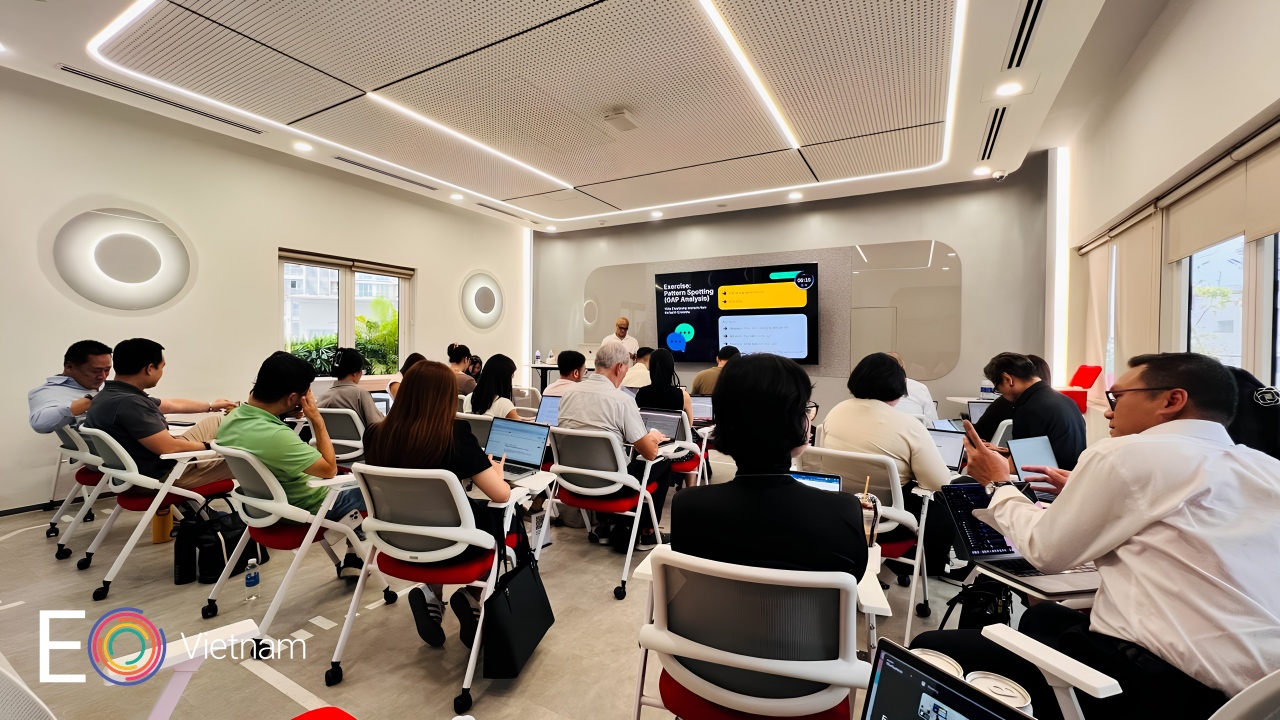
The exercise behind that Brandbook has one job: closing the distance between how a founder thinks they come across and how their team experiences them day to day. It breaks into four pieces. A single sentence naming the consistent experience people have working with the founder. A short list of values, each tied to a specific behavior someone could observe. Rules for decisions, communication, and conflict, spelled out clearly enough that a deputy could run things the same way for a week without the founder in the room. And a list of lines that never get crossed, whatever the pressure. The instruction that stuck for most of the room was to pick one behavior out of the whole brandbook and drill it, on purpose, until it stopped being effortful.
Here's what came out of it, in the words of the people who were there:
- DNDru NguyenTictag
The questions were difficult to answer and helped to really dig deep and reflect.
- TBTam BuiNha Khoa Parkway
I learned to be aware of how my strength can backfire.
- HTHoang TruongVulcan Labs
Structural leadership assessment.
- CACamiWHS
Consistency! Knowing that what matters is how I show up any given day.
- NHNhan HuynhVPP
Energy, clear instruction.
- HTHarley TrungCoderPush
Dave is excellent!
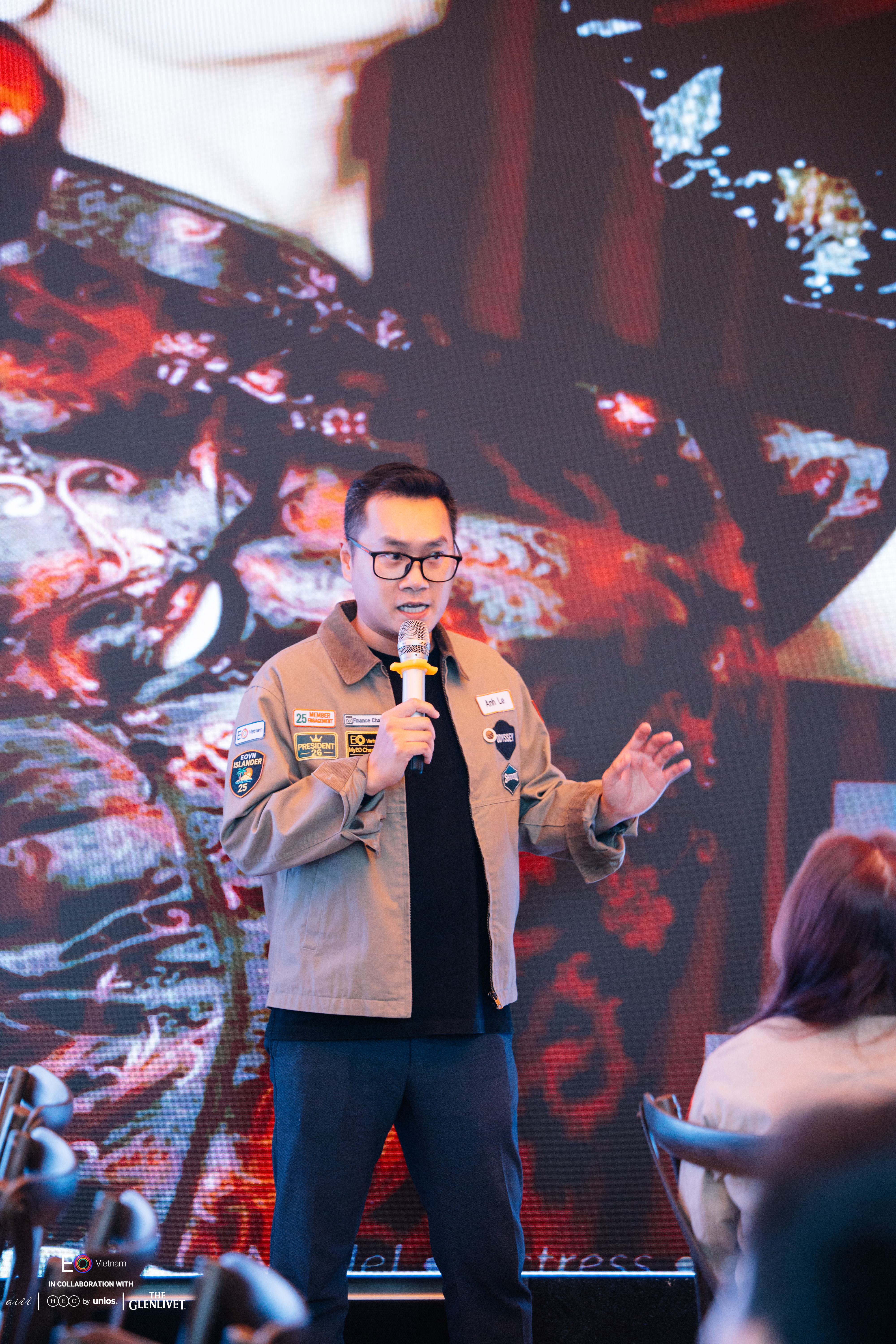
President Le Tuan Anh, himself a founder, was one of the people who pushed to bring Holtom's program into the chapter, and he doesn't pretend the first level is behind him just because he runs the place.
Reps, not personality
The second stage is hiring for the right seats, coaching for performance, accountability, and retention. This is where leadership stops being private and starts being a daily practice other people depend on. Two forces are making it harder to ignore than it used to be: members are growing faster, and AI is compressing how quickly a bad habit at the top turns into a real cost, in hiring, in strategy, in how a team works. A founder can now produce a board deck and a hiring plan before lunch, and mistake the output for the judgment behind it. "They think it's personality," he says of the founders who stall as their companies grow past what their instincts can handle. "It isn't. It's reps."
Some of what the program works on can't be sped up with a tool at all: telling early that a new hire is quietly struggling, holding a position in a negotiation without wrecking the relationship, or picking up on the pause before someone decides to quit. "AI can prep you for the conversation," Tuan Anh says. "It can't sit across from the person for you." For that kind of judgment the program relies on the same thing Forum does: someone else in the room who watched what happened and will tell you.
Not a survey score
The third level is negotiation, workflow design, using data in decisions, innovating without dropping execution, and leading change. It's where the first two either compound or collapse. The founder running the chapter has a specific marker for whether it's landing. "The founder stops being the bottleneck every decision has to route through," he says. "People start bringing solutions instead of problems. The ones you didn't want to lose stop leaving. You can feel it in the room, meetings get shorter and sharper, and the founder finally has space to think instead of firefight." In his experience the shift shows up roughly six months after someone starts leading differently.
As the man who greenlit this program, he won't give away what happens inside any single session, but he's clear about the general shape. "Session one is the map," he says. "Session two is you on the field, with the real situations you've been avoiding. Come having actually tried something, because we're going to work with what happened, not the theory."
The founders themselves make that call, roughly a year out, in whether people who work with them start describing them differently: steadier in the conversation they used to avoid, the hard feedback, the negotiation, the honest talk with a co-founder. No committee gets to grade it.