
Tuning the voice that runs the business
Boudoir Lounge, Sofitel Saigon Plaza, HCMC · Friday 18 September 2026
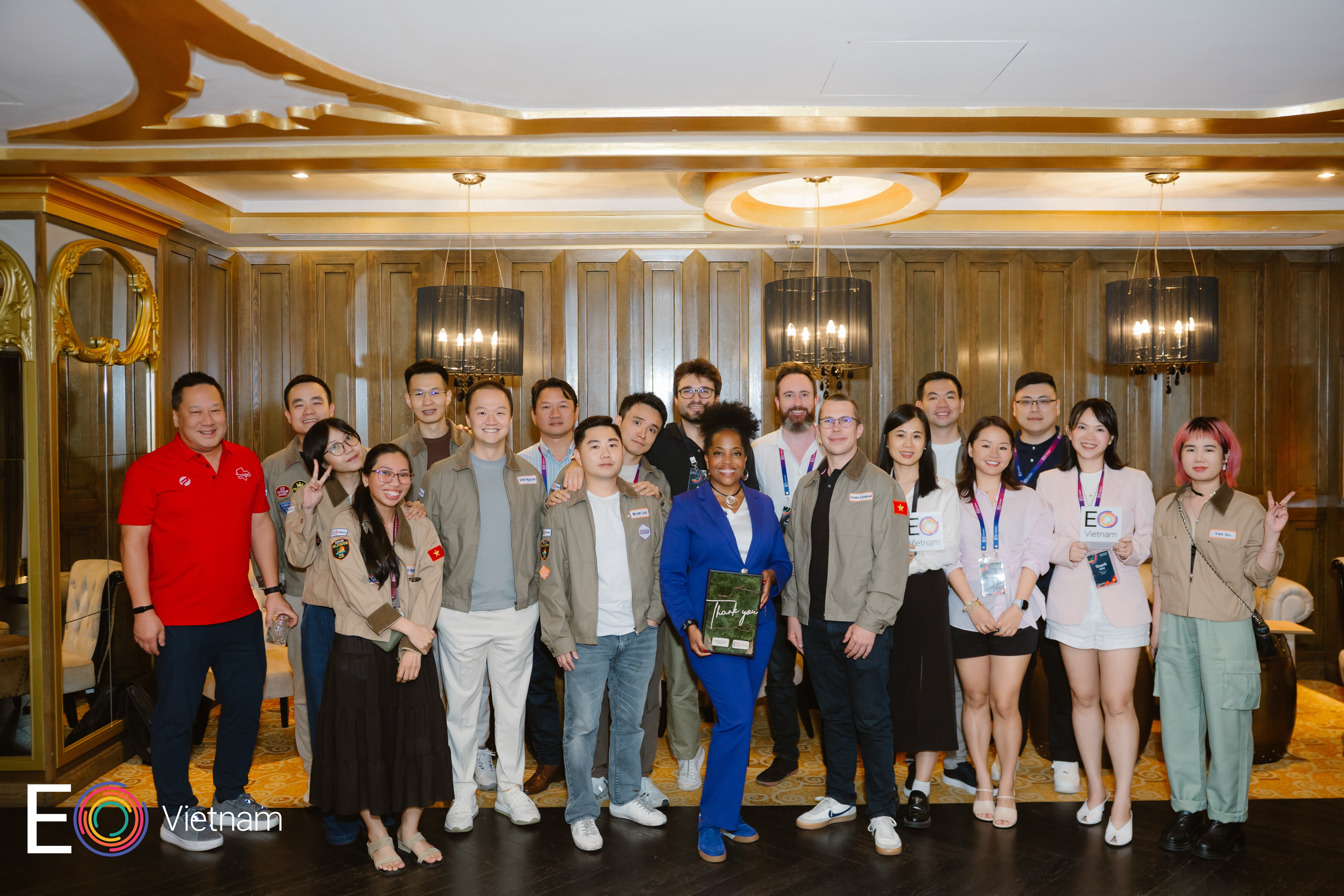
For a few minutes, the loudest thing in the room was pens on paper. Rhonda Ross had just asked everyone to write down a feeling, not "I feel bad" but the actual word, specific enough to work with, and eighteen EO Vietnam members sat with that.
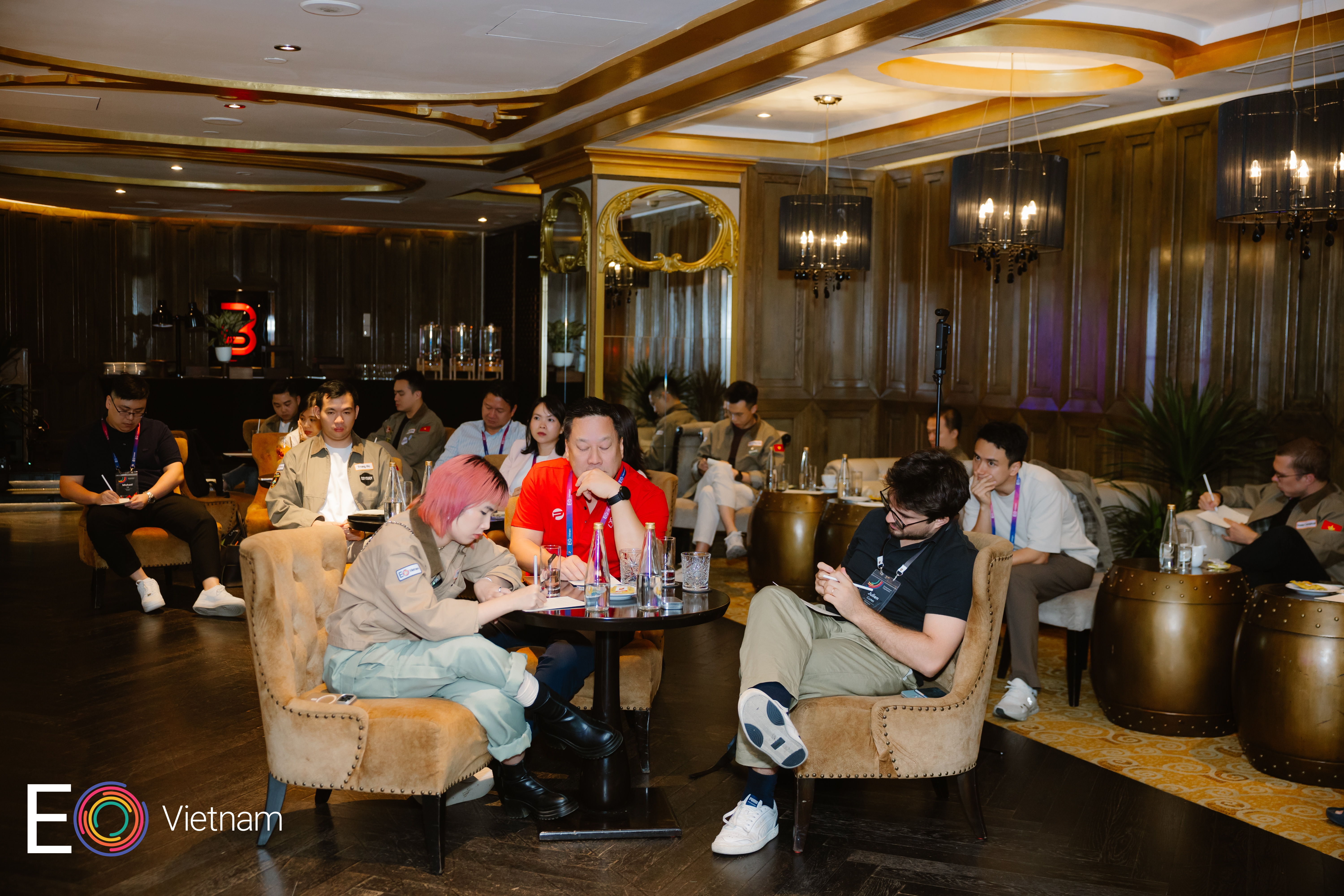
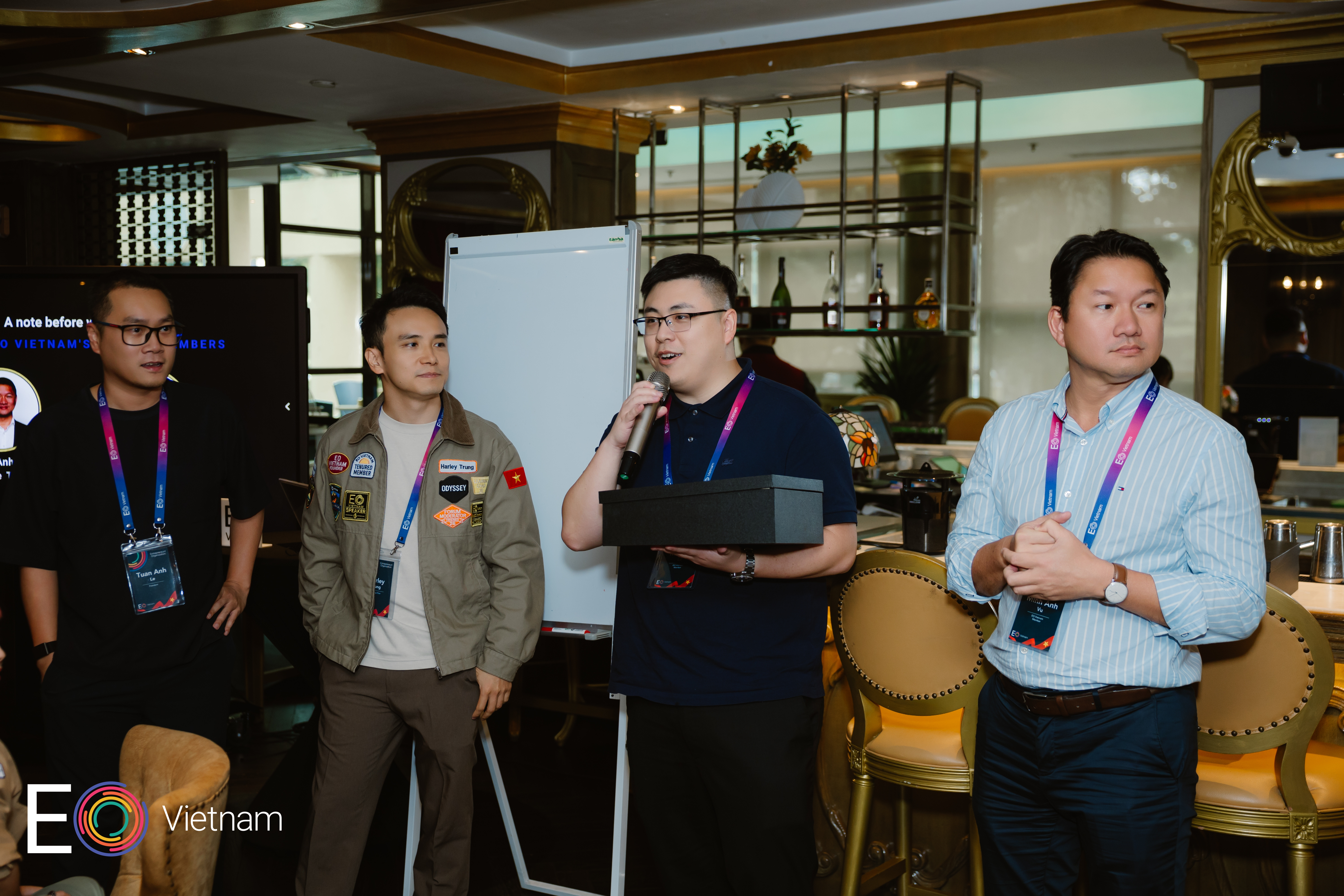
They were at Boudoir Lounge, Sofitel Saigon Plaza, on Friday 18 September 2026, for an afternoon Harley T., Learning Chair, opened. He introduced the chapter's two newest members, Minh Anh V. and Michael L., and invited president Tuan Anh L. up to present them with welcome gifts, before handing things back to Harley, who introduced Rhonda as a singer-songwriter and actress turned mindset coach, and the daughter of Diana Ross and Motown founder Berry Gordy, a lineage Rhonda came back to a few minutes later as the opening example for the method she was about to teach.
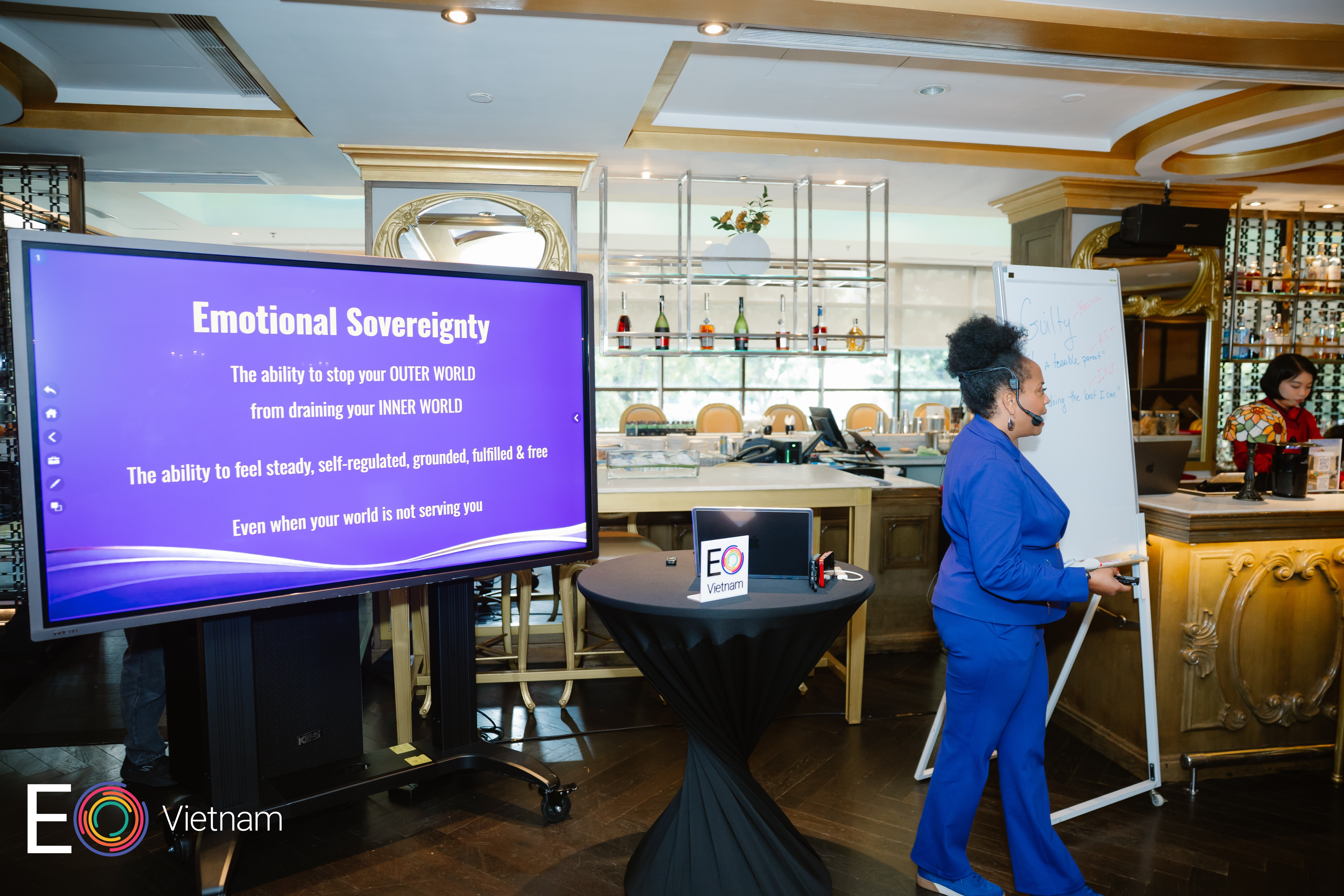
Rhonda's method is built on one idea: there is a space between what happens to us and how we feel about it, and inside that space lives an inner voice made of our own thoughts, filtering what gets in and what doesn't. Left untended, that voice runs on autopilot. She calls the tuned version emotional sovereignty.
From the feeling, members worked the rest of the method on paper: name the automatic thought driving it, then question it. One attendee's thought had been running unquestioned for a long time, "I'm not moving fast enough." Investigating it opened up something new: who decided what's fast enough in the first place? Another attendee's thought shifted from "this is unbearable" to two words, "challenge accepted." Chloe H., doing the exercise herself, put it this way afterward:
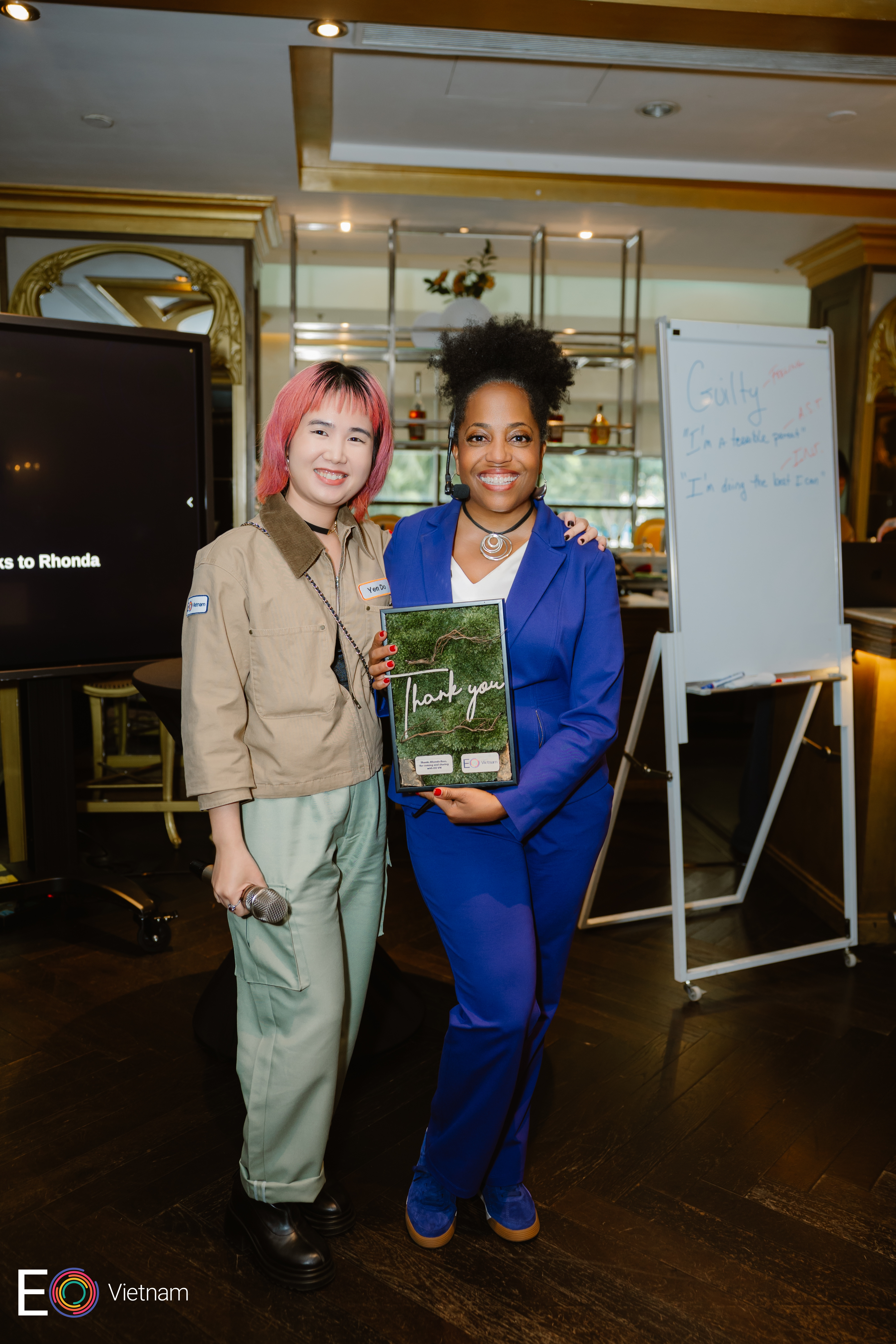
Rhonda worked her own example on the whiteboard alongside the room: a feeling of guilt, an automatic thought of "I'm a terrible parent," and the thought she chose instead, "I'm doing the best I can."
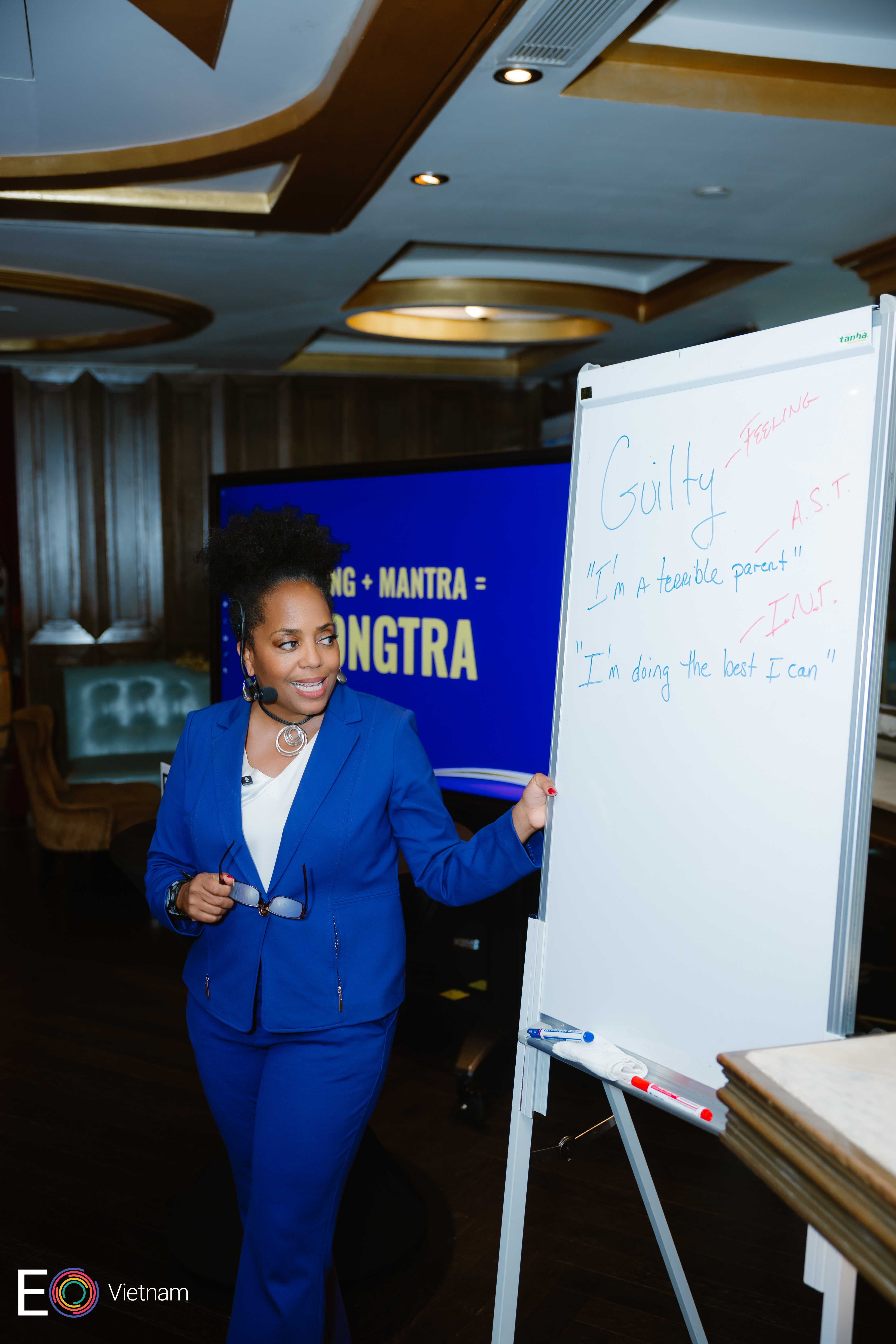
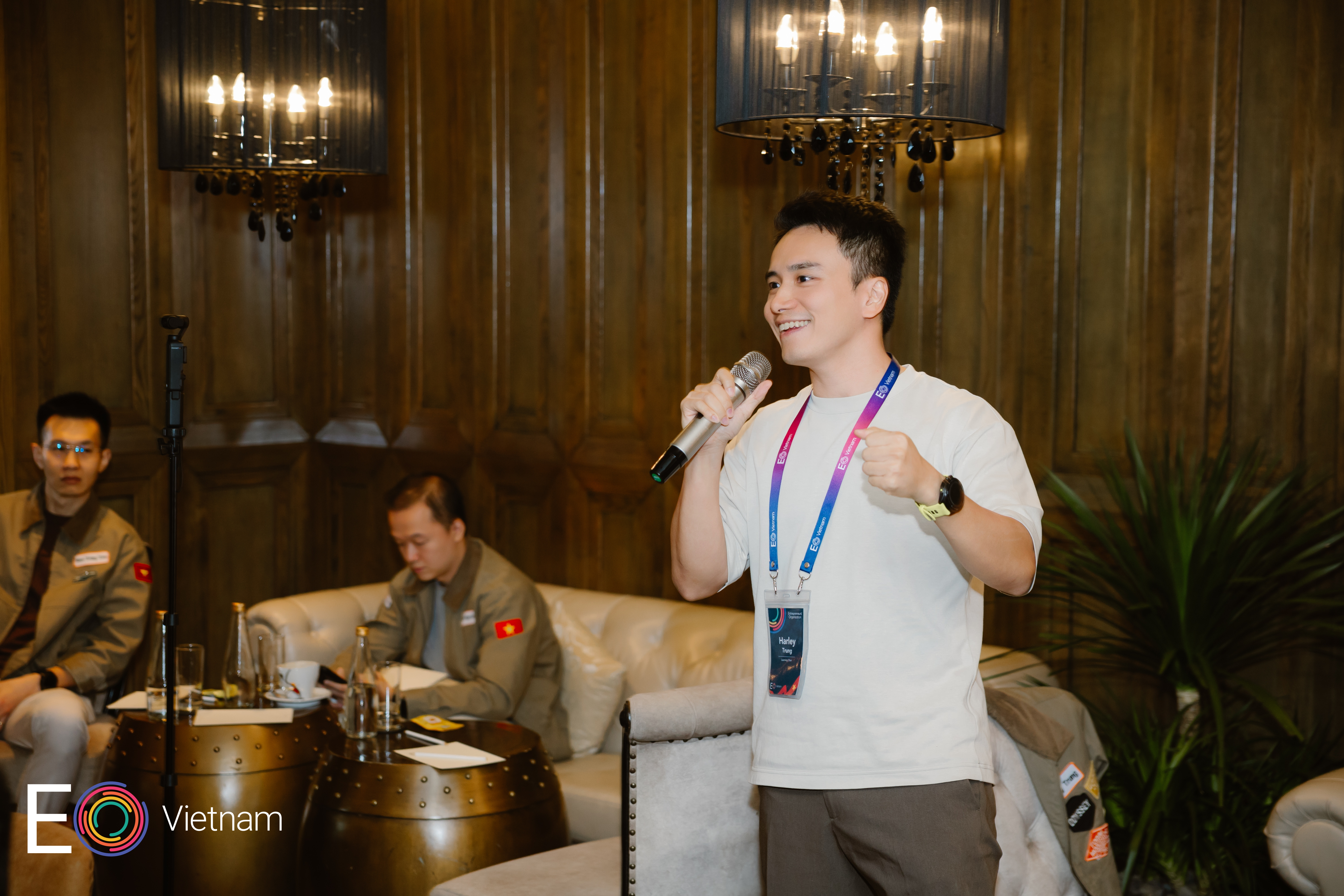
The method ends with a Songtra, a thought set to a melody so it stays with you after the room empties. Harley took his turn with the mic. His automatic thought was anger, at not knowing what he was doing. Rhonda walked him through it until he landed on his own line and sang it right then: "That's how, that's how, that's how I'm going to learn." She asked the group to sing it back to him. They did, twice.
Trung T. wrote this the same day.
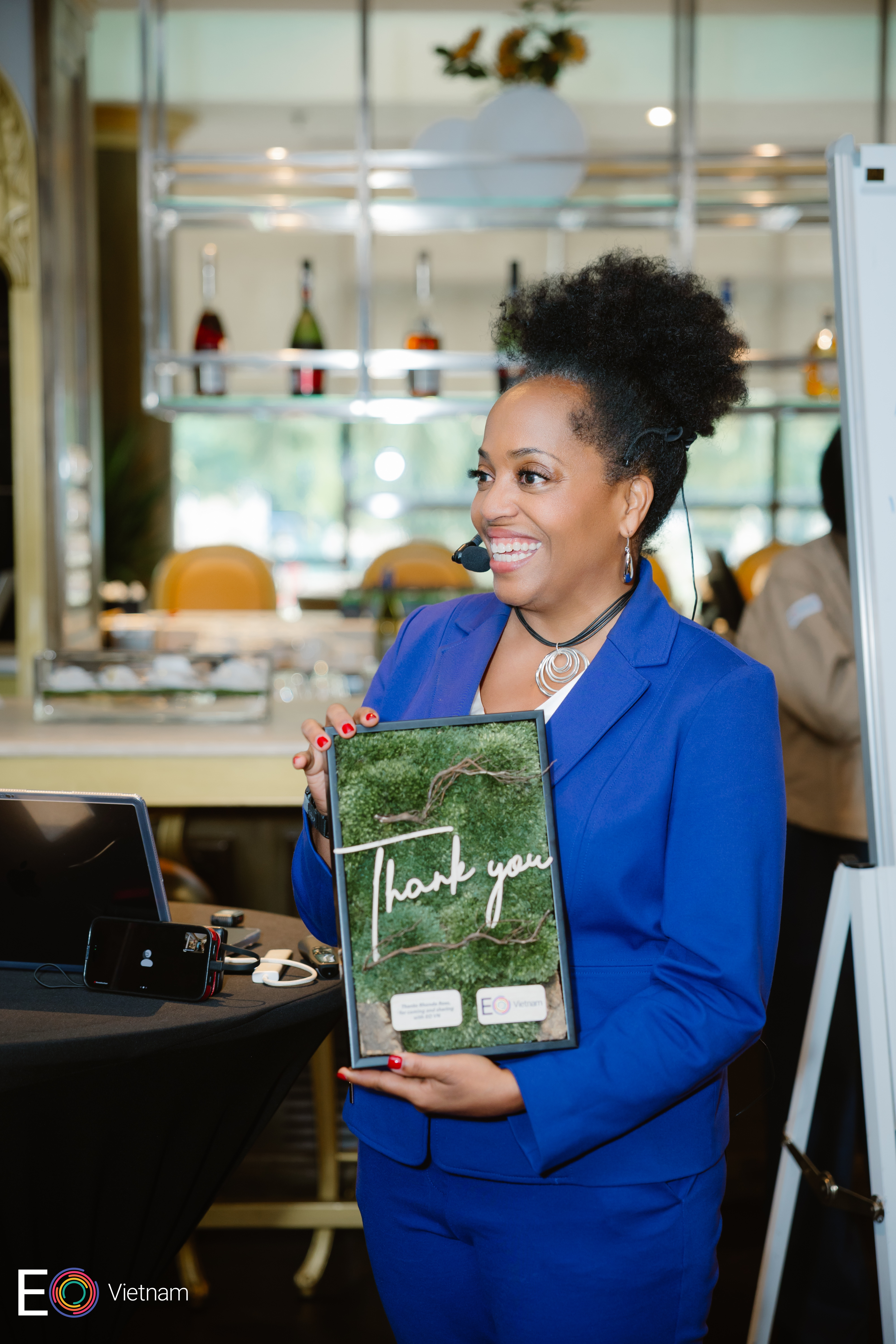
Yen D., this event's chair, thanked Rhonda and presented her with a gift on behalf of the chapter before the room moved on to drinks.
A short recap of the afternoon, with a few words from Rhonda and Chloe H.: