
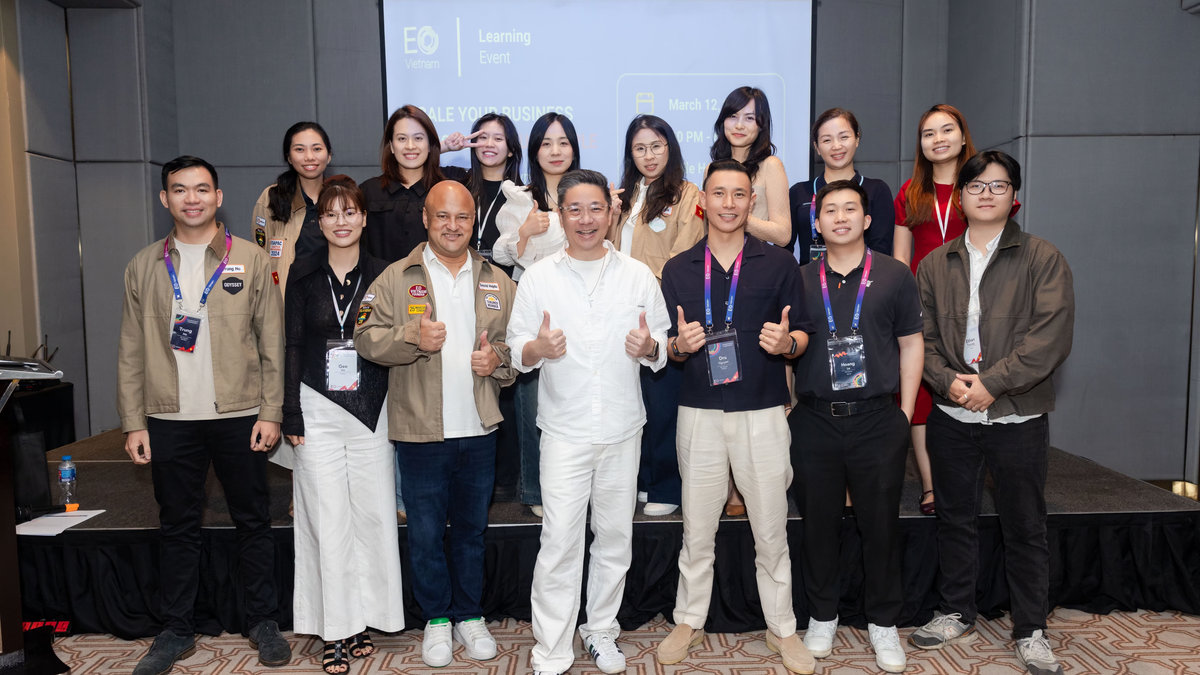
64.8% of Vietnamese workers plan to change jobs in the next six months. 77% of employers in the region say they can't find talent.
Most founders react to this by doubling down on the wrong things. Higher salaries. More perks. Demanding loyalty in job ads.
But here's what I watched a room full of entrepreneurs realize during a four-hour workshop in Ho Chi Minh City: loyalty isn't a value you can screen for. It's a result of things you build. And most companies haven't built them.
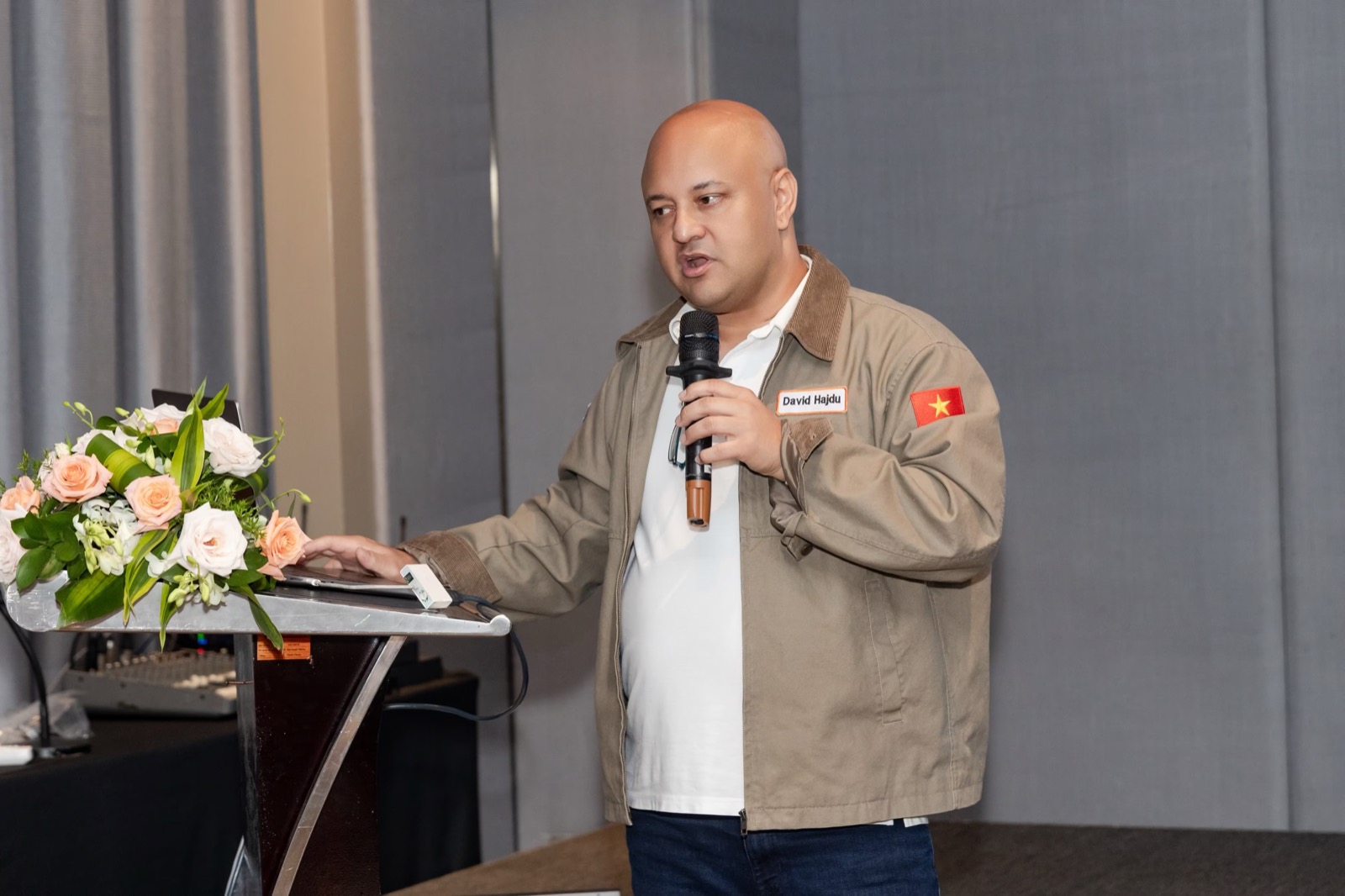
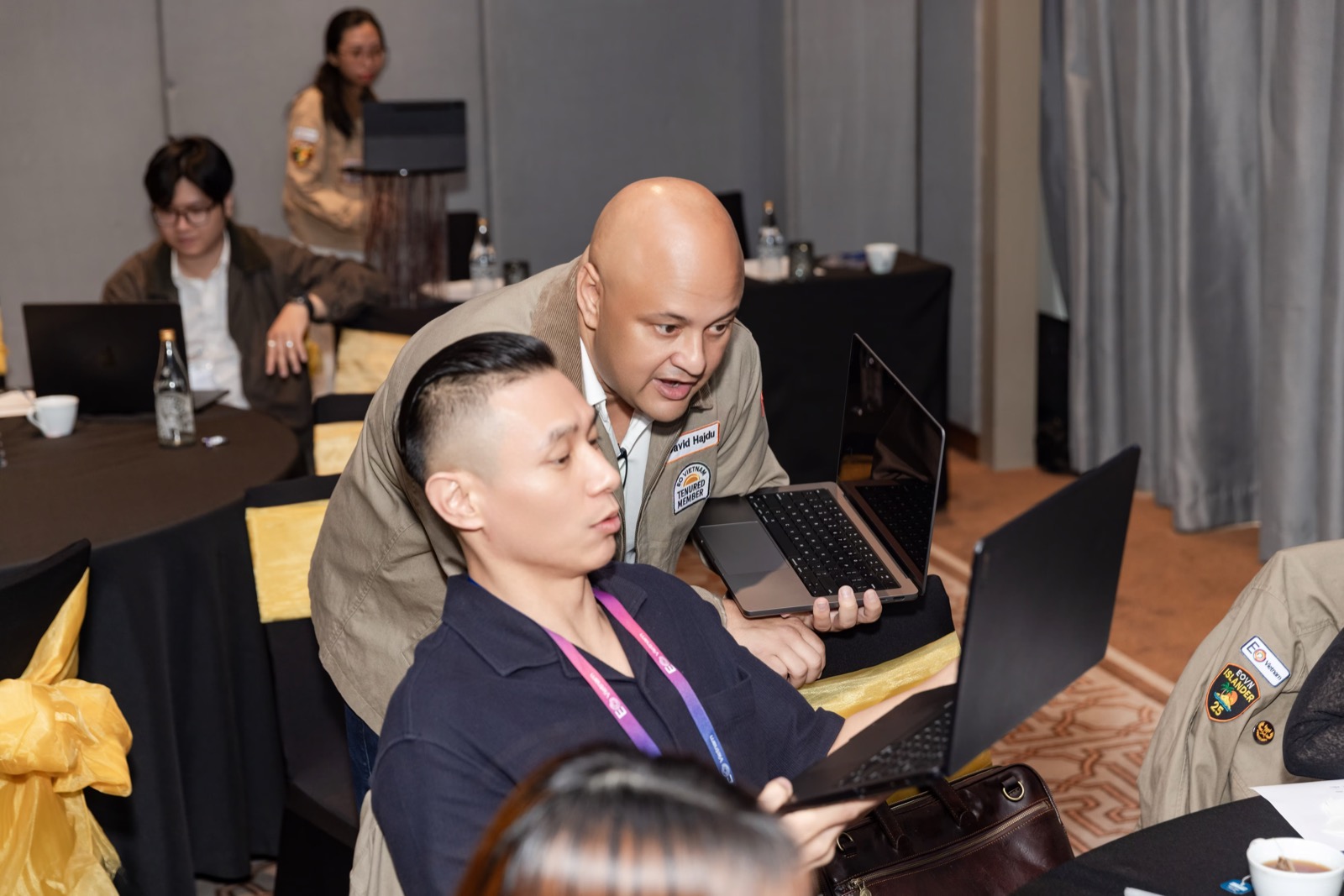
The workshop was part of Leadership in the AI Era, a 12-session program I co-run in Vietnam. Ray Chou led the teaching. He's built 19 companies, coached dozens more, and has a way of saying things that sound obvious five seconds after he says them but that nobody in the room was actually doing.
View full photo gallery here: Google Drive gallery
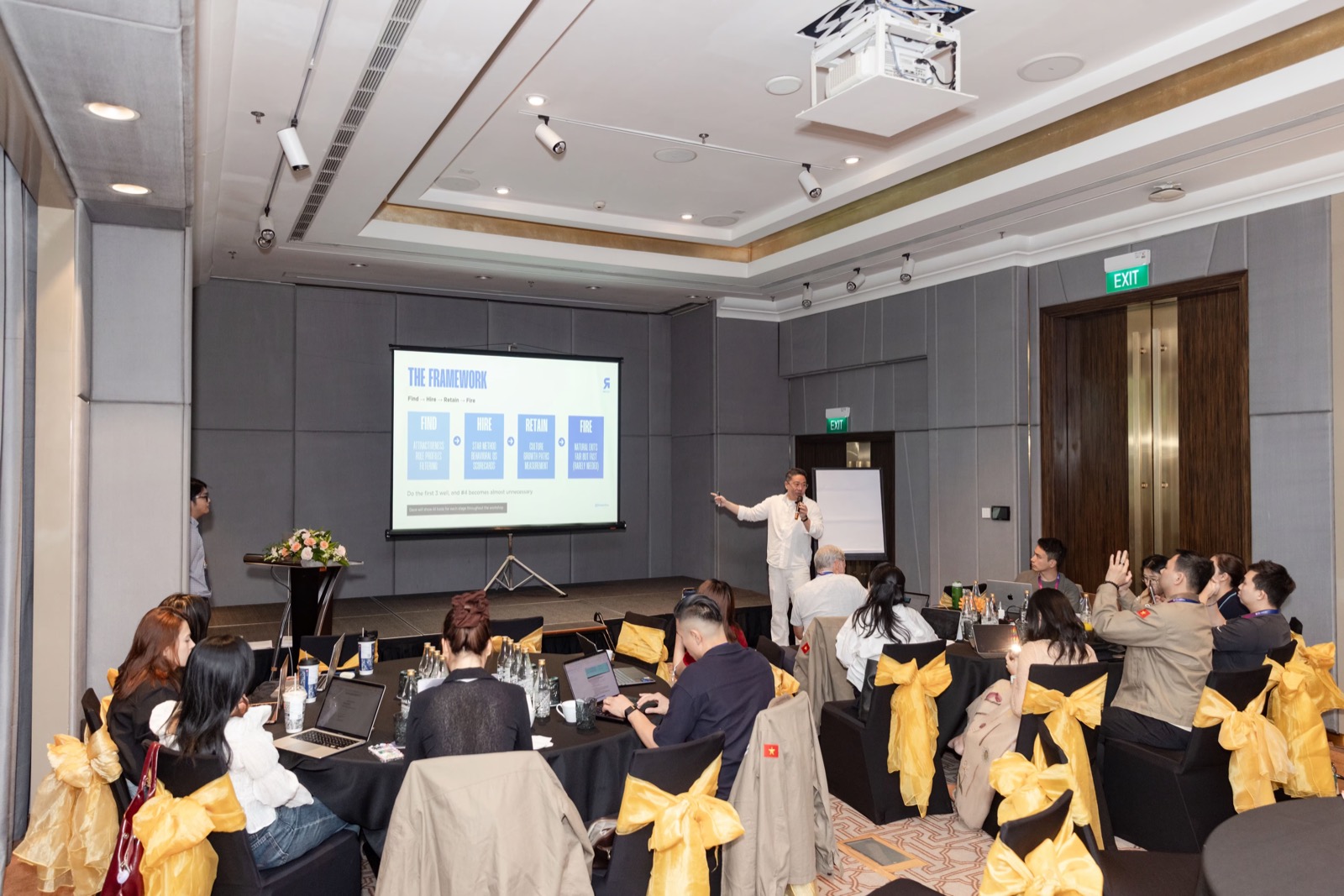
The whole session was organized around one idea: the employee lifecycle has four phases. Find, Hire, Retain, Fire. If you do the first three well, the fourth takes care of itself. What surprised me wasn't the framework. It was how much AI changes the execution of each phase once you understand what you're actually trying to do.
Let me walk through what stuck.
Everyone says people are their best asset. Ray asked the room to think about the person on their team right now that they desperately want out. That person isn't an asset. The right statement is: The Right People Are Your Best Asset.
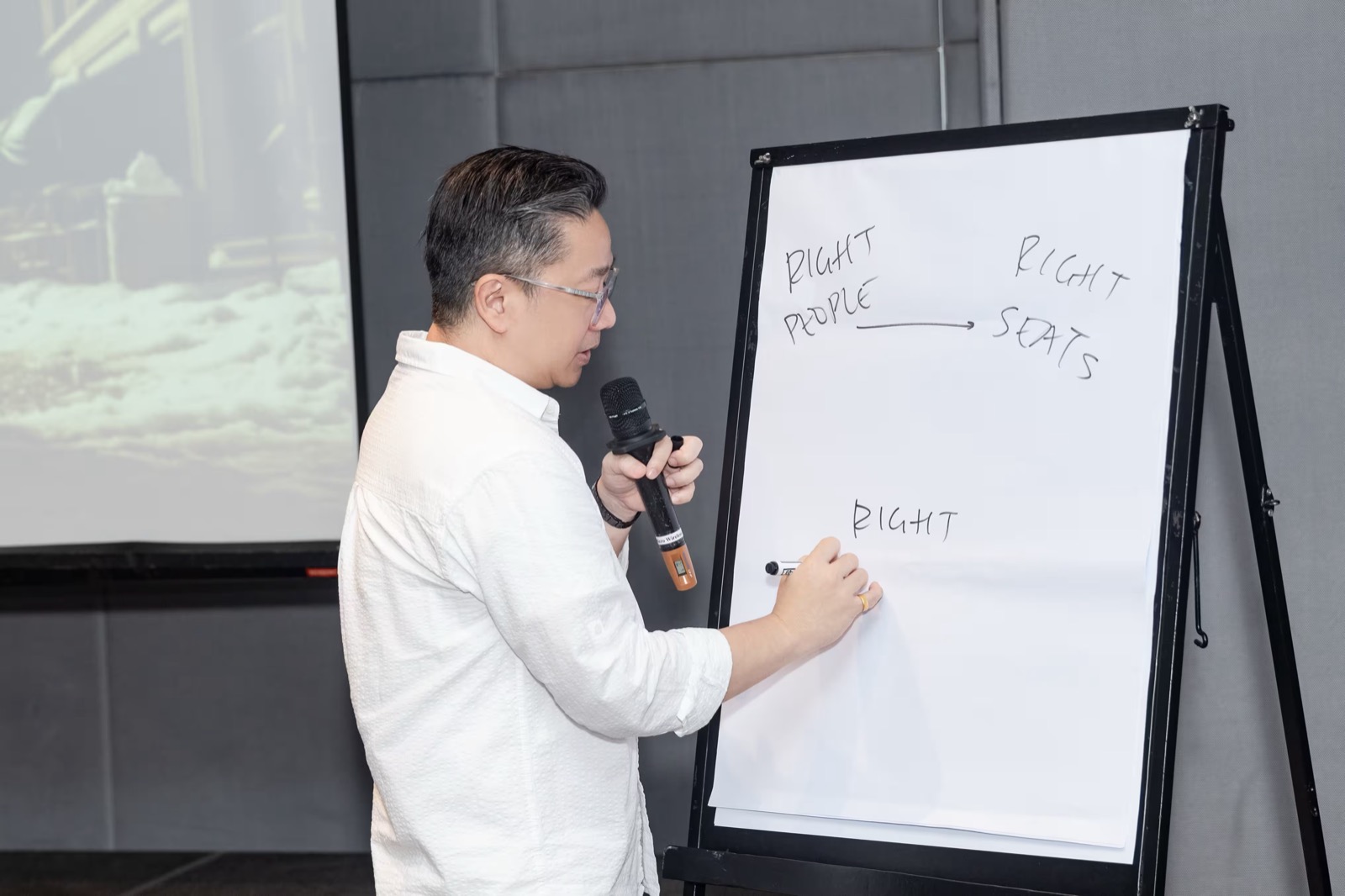
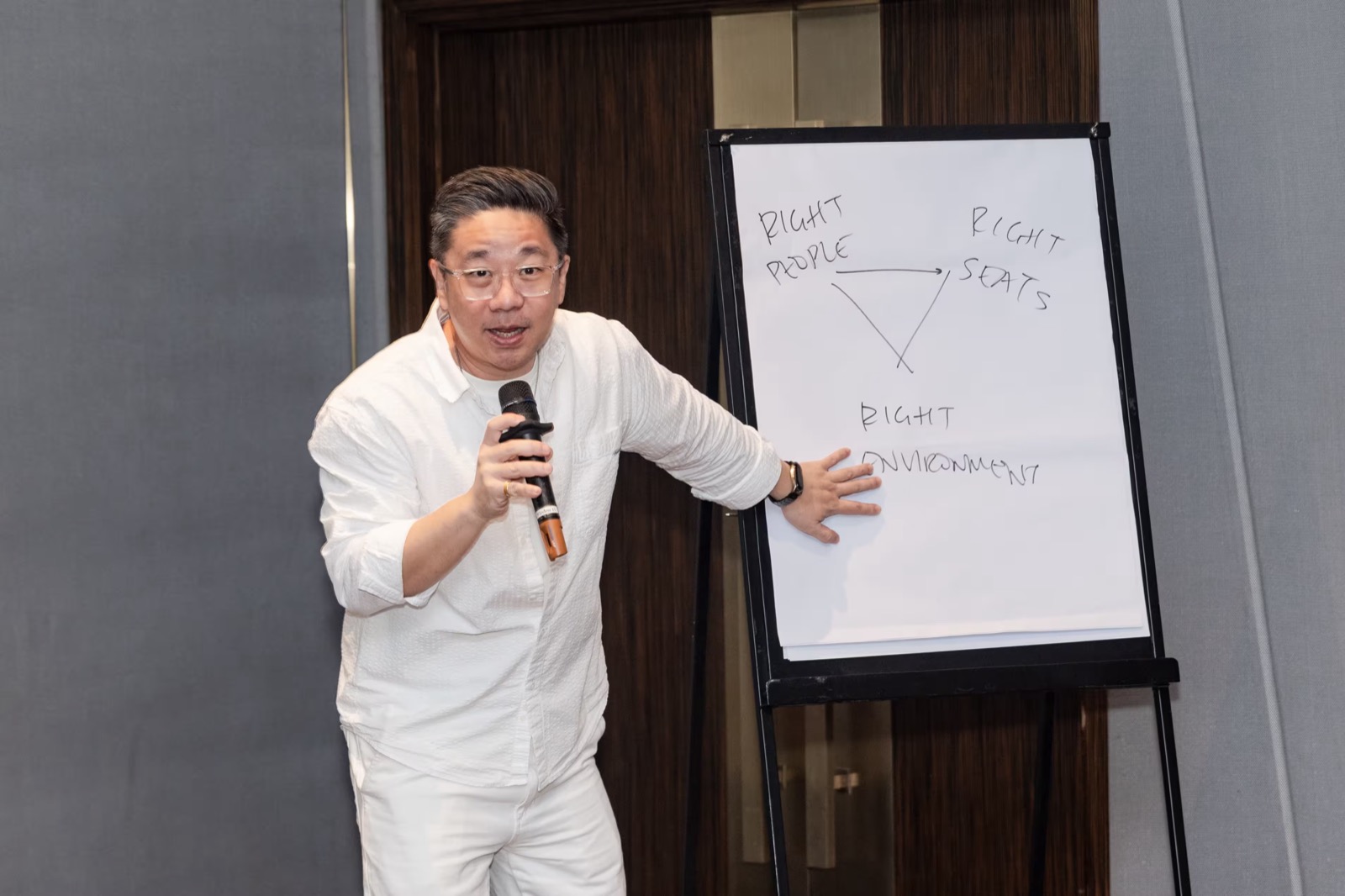
We've all heard "right people, right seats." But there's a missing piece that took Ray 30 years to name: the right environment. You can have the best steak in Saigon, but if the restaurant is next to a smelly drain, nobody's coming.
That reframe matters because most founders spend all their energy on finding great people and almost none on building the environment that makes great people want to stay.
The most uncomfortable moment in the session was when Ray said you can't hire for loyalty. He used to put it in his job ads. Then he realized loyalty is what happens when people love what they do, who they work with, and where they're going. It's an output, not an input.
He told a story about selling one of his companies. He had 130 employees. He'd spent years telling them "we're in this together" and "let's grow together." Then the deal closed and he left. Just like that. He realized he was the disloyal one.
That experience changed how he hires. Now he tells every new person up front: "I know you'll probably start looking around in three years. Can you commit to giving everything you've got during that time?" It's disarming. It's honest. And paradoxically, people stay for 10 or 15 years, renewing in three-year cycles, because someone finally told them the truth.
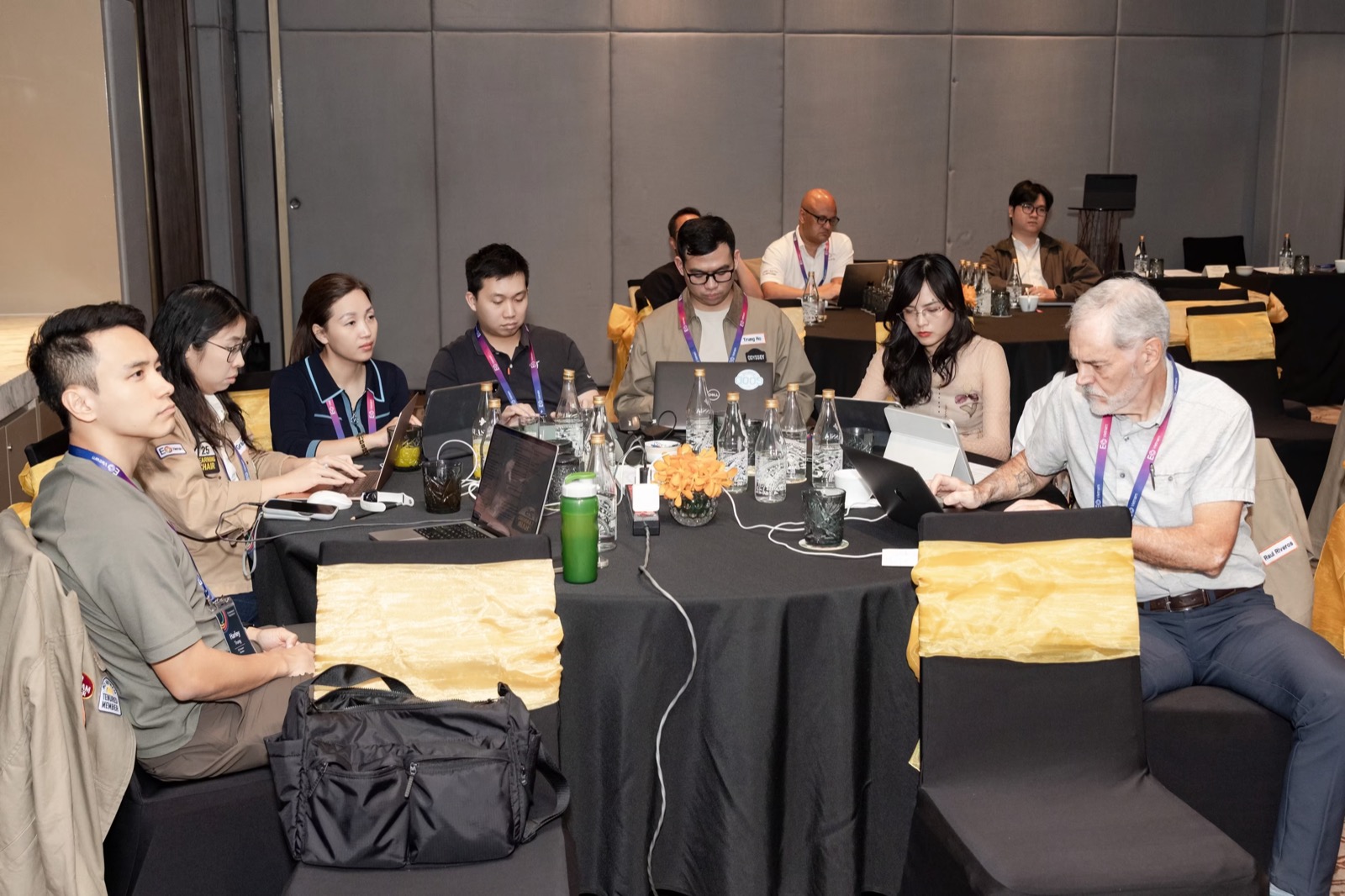
If nothing is forever, then the system has to outlast the person. This is where most growing companies fail. McDonald's doesn't have the best burger. It has the most predictable one. Any college student can make a Big Mac in 30 minutes. That's not a people story. That's a systems story. Ray uses a 70/30 rule: 70% of your time doing the work, 30% improving the process for the next person. Because if everyone eventually leaves, your job is to make sure the next person can pick up exactly where the last one left off.
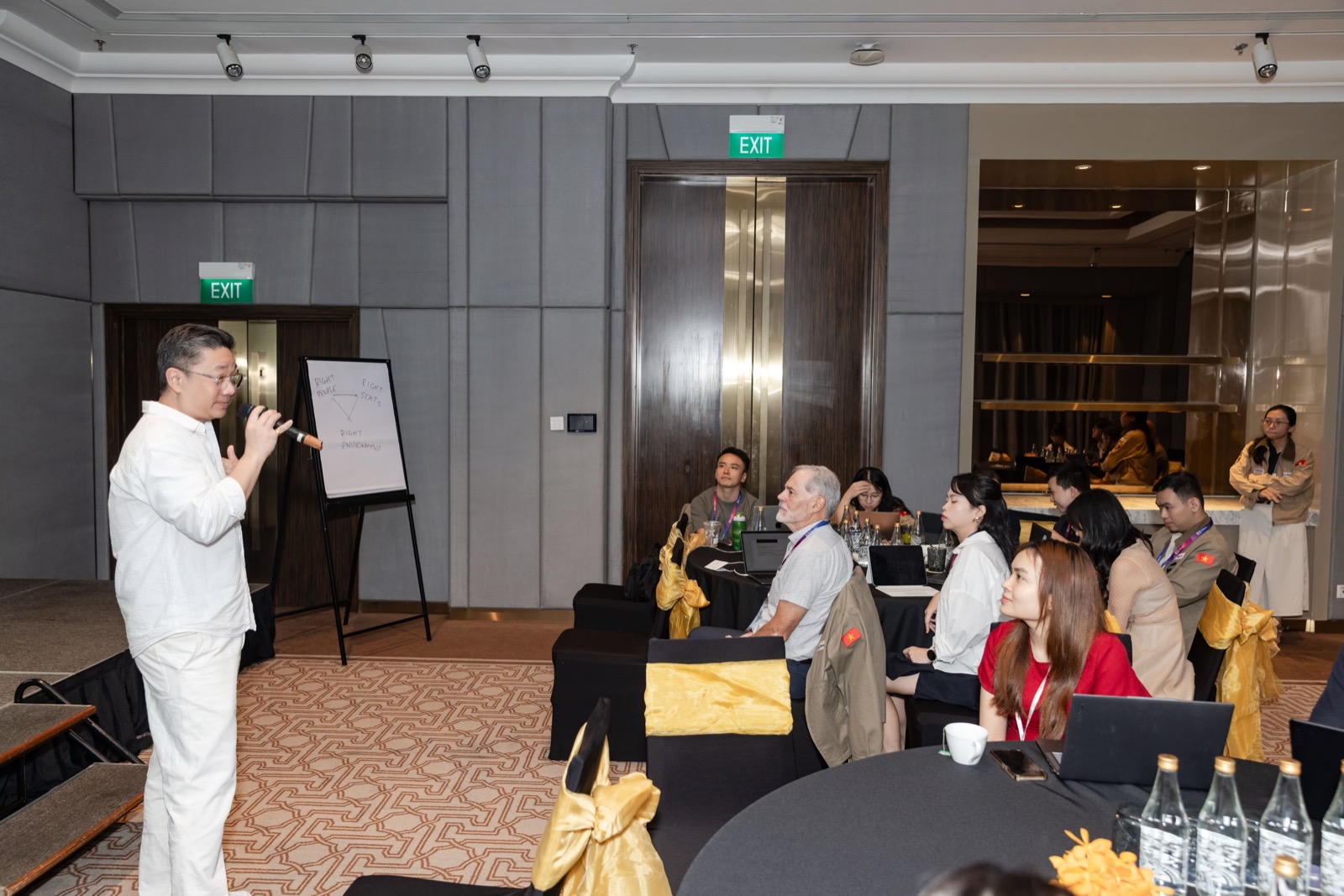
Here's something I didn't expect to be the most visceral exercise of the day: Ray had everyone Google each other's companies.
The results were brutal. Missing Google My Business profiles. Dead Instagram accounts. Websites that hadn't been touched in years. And these are successful entrepreneurs running real businesses.
The insight is simple but most people miss it. 74% of candidates say company size doesn't matter when they're looking for a job. The real differentiator is visibility. If someone Googles your company and finds nothing, you're not small. You're suspicious. In a world where everything is on the internet, a company with no digital presence feels like a scam.
The instinct for B2B companies is to dismiss this. "We don't need Instagram, we pitch clients directly." But your next hire isn't your client. They're scrolling Instagram, not LinkedIn. Ray showed an events company in Malaysia that went from $540K during the pandemic to $17 million in five years. B2B business. They post internship diaries and team culture videos on Instagram. Not for clients. For talent. You have to fish where the fish are.
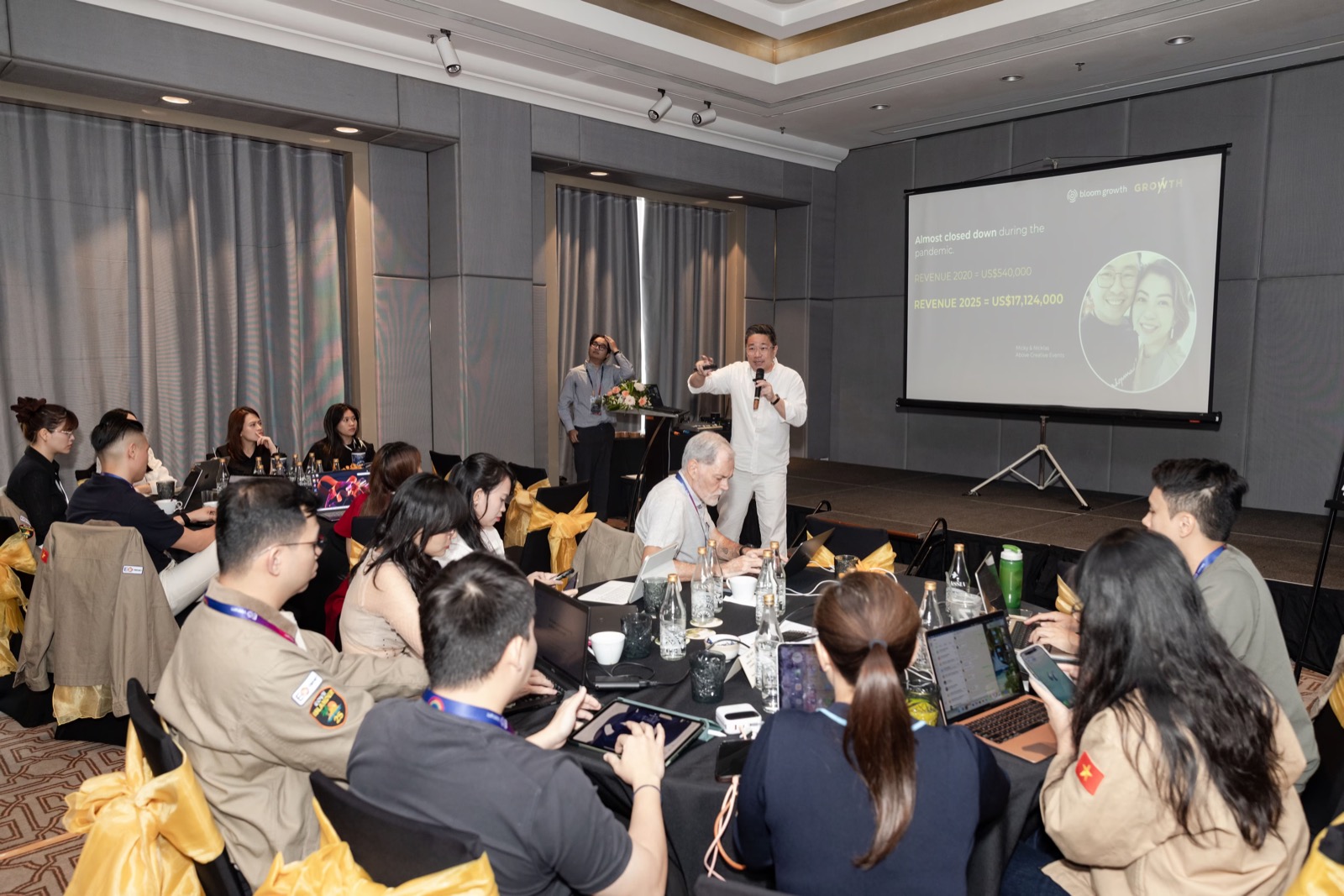
Traditional interview questions predict 10% of job performance. Behavioral questions predict 55%. That gap should make you angry about every bad hire you've ever made.
"Where do you see yourself in five years?" tells you nothing. "What if you were in this situation?" tells you what someone thinks they would do, which is almost never what they actually do. The fix: ask people to tell stories from real experience. What was the situation? What was the task? What action did you take? What was the result?
Standardize your questions so every candidate gets evaluated against the same criteria. Spend the first 20% of the interview building rapport before the hard questions. Listen for "I" versus "we." When someone says "we" for everything, follow up: "What did you specifically do?" If they can't answer, they were hiding behind the team, not contributing to it.
One technique most of us have never tried: put an observer in the room. Someone who says nothing during the interview and afterwards gives the interviewer feedback on how they performed. When was the last time anyone gave you feedback on how you interview? That's a blind spot you didn't know you had.
Three things make people stay: structure, culture, and growth.
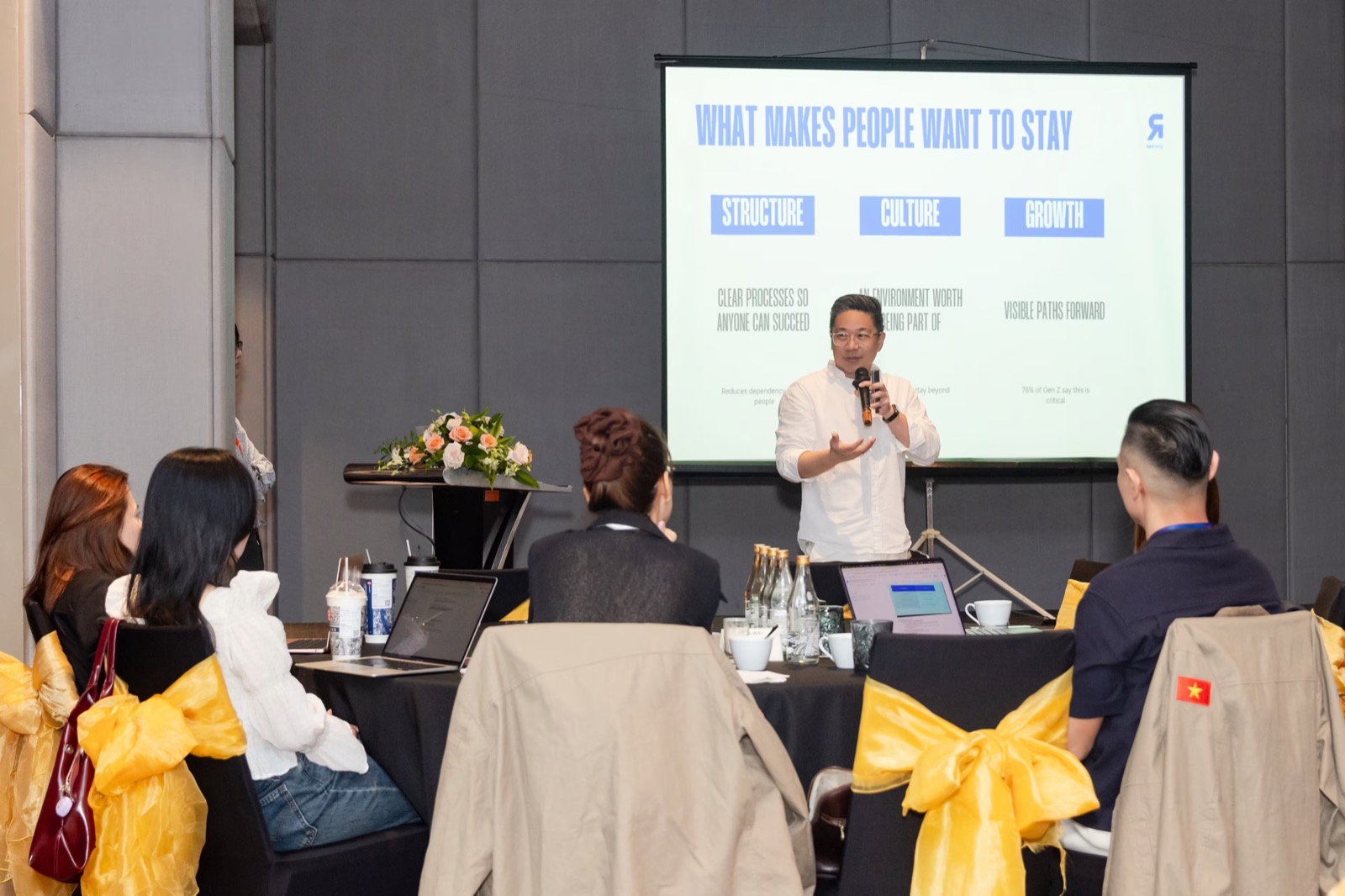
On structure: entrepreneurs can tolerate uncertainty. The other 96% of the population cannot. They need to know where they're going. If you left a corporate job because you hated process, congratulations. Now go build some.
On culture: stop calling your company a family. Some people have terrible families. The word signals comfort, not performance. Frame your team as a high-performing sports team instead. You come together, you leverage each other's skills, and you win together.
On growth: 76% of Gen Z says growth is the number one reason they stay. Not money. If your people don't have KPIs, they don't know they're progressing. And if they don't feel progress, they leave. Even if they love you.
One more lesson on fairness. Giving every employee the same bonus feels fair. It isn't. When your top performer gets the same reward as someone who barely shows up, you lose your best person. Fairness is not sameness.
Find the right people. Hire them well. Build a culture worth staying in. When those three are working, the wrong fits filter themselves out. People who don't match the culture resign on their own. Performance gaps become visible through KPIs, not guesswork. The kindest thing you can do for someone in the wrong seat is help them find the right one. Even if it's not with you.
Now here's where it gets interesting.
Most companies use AI to write job postings. That's the shallow end. The real leverage is using AI to build a hiring system that compounds over time.
Start with your employer brand. Before you post a single job ad, feed AI your company description and ask it to audit how a candidate would perceive you. What signals are you sending? What's missing? What kind of person would this attract, and is that the person you actually want? Most founders have never seen their company through a candidate's eyes. AI gives you that mirror in sixty seconds.
Next, move from gut feel to full demographic profiles. This isn't writing a job description. It's building a detailed picture of the ideal candidate: background, experience patterns, behavioral traits, cultural markers, the things you'd recognize in the right person but have never written down. When that profile is specific and structured, everything downstream gets better. Screening gets sharper. Interviews get more focused. And every interviewer on your team evaluates against the same standard instead of their own gut.
Then let AI do what humans can't. Resume scanning takes 20 to 30 hours per role for a human. AI does it in minutes. But the output is only as good as the profile you feed it. This is why the sequence matters. You define the brand, you build the profile, and then AI screens against criteria you actually thought through. The result isn't just speed. It's consistency. Every candidate measured the same way, every time.
The most powerful move is after the interview. Every interviewer is biased. That's not controversial, it's just true. The problem is that human bias is invisible, inconsistent, and different from one interviewer to the next. AI is also biased. The difference is you control the bias. You define the lens. You write the instructions.
And if you want three different perspectives reviewing the same transcript, you create three AI interview panelists, each with different evaluation criteria. One optimizes for culture fit. One optimizes for technical skill. One plays devil's advocate and looks for red flags. Same transcript, three structured evaluations, all against criteria you chose deliberately. It's the ultimate diversity initiative. Not diversity of candidates. Diversity of judgment.
Every prompt you build is reusable. The system you create for one role works on the next one, and the one after that. Prompts become processes. Processes become infrastructure. And the hiring bottleneck that lives inside the founder's head starts living inside a system anyone on the team can run.
This session received the highest AI Value rating in the program so far: 4.7 out of 5. The Net Promoter Score came in at 78, well above the program average of 66, with zero detractors. Every participant left with a specific next step they plan to implement, from reworking their interview process to building candidate profiles in AI. The session was the first of a four-part arc on leading others. Next up: High Performance Coaching, then Accountability, then Retention with Dr. Brooks Holtom, one of the world's leading researchers on why people stay and why they leave.
Leadership in the AI Era is a 12-session development program running in Ho Chi Minh City. If you're a founder who wants leaders who can run the business so you can focus on growing it, reach out.
About the Session Leaders
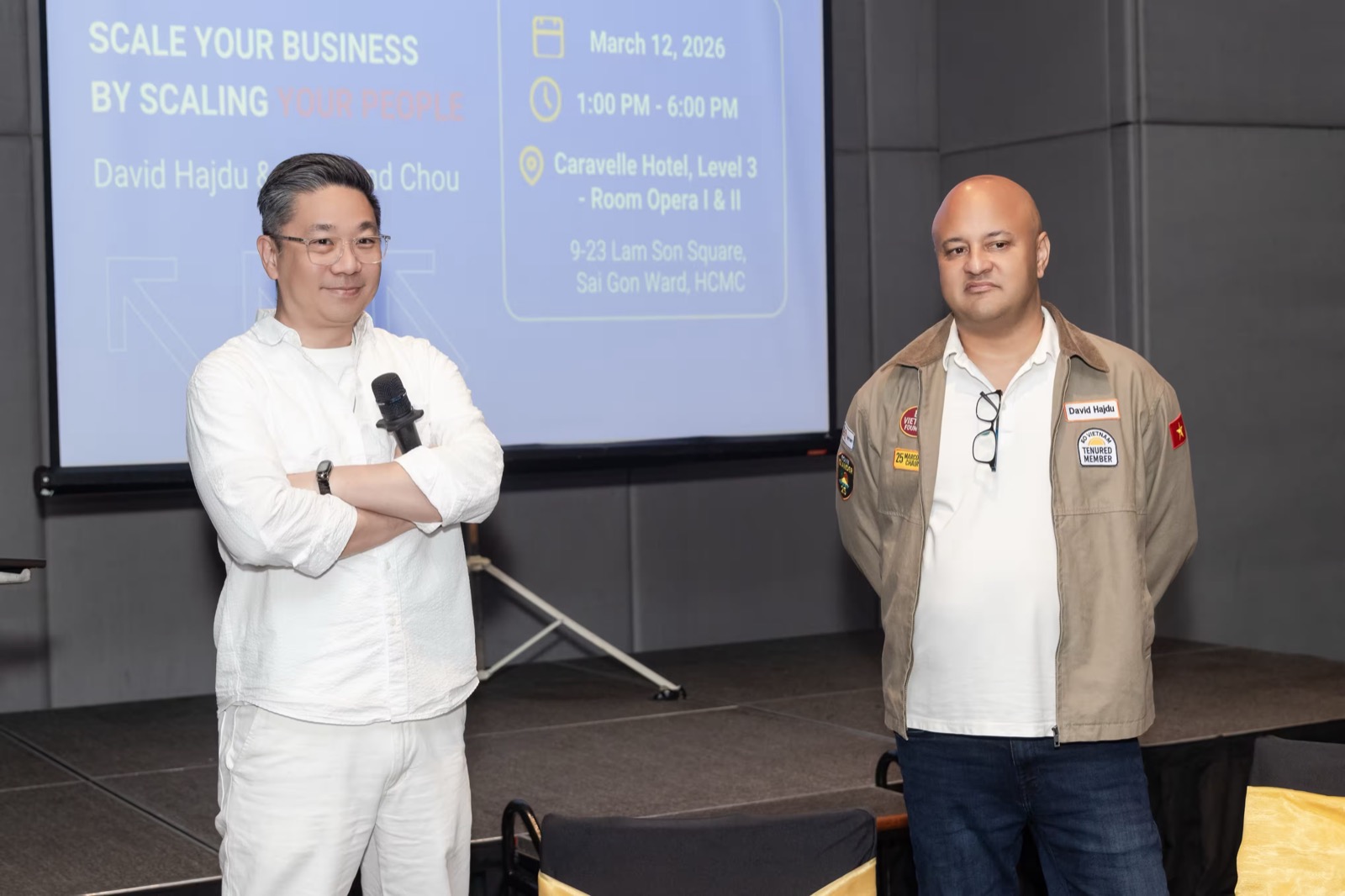
Ray Chou is a serial entrepreneur, former EO Malaysia President, and founder or co-founder of 19 companies across food, technology, events, and AI. He scaled an AI company from Malaysia to 9 countries before selling it during the pandemic. He now coaches founders through the scaling challenges he's already solved.
Dave Hajdu is the founder of AI Officer Institute and Edge8 AI. He started as a data analyst at Microsoft in 1999, where he learned the lesson that drives his work today: "It's not an AI problem. It's the data." He founded Vinasource, co-founded TINYpulse (acquired by WebMD), and founded EO Vietnam. He designs AI integration strategies for leadership teams and co-created the Leadership in the AI Era program.
What's next: join the remaining sessions
Session five is coming up on March 25th: Coaching Talent for High Performance, taught by David Hajdu.
"Leadership in the AI Era" is a mini-MBA style program that would typically cost tens of thousands of dollars and require travel to a top business school. Because of EO, members get access to world-class executive education developed by a Georgetown University professor right here in Vietnam.
Leadership in the AI Era is an EO Vietnam learning initiative developed by Dr. Brooks Holtom (Georgetown University), David Nilssen, and Dave Hajdu. For more information about upcoming sessions, visit www.eovietnam.org/training